


New-era leadership communication is bold, brief and sincere – both offline and online.
Just ten years ago, a “serious leader” meant mostly closed meeting rooms, strict press releases and maybe a couple of cautious media interviews per year. Today, it’s completely normal that the same leader appears in front of employees, clients and future talent in a totally different environment – for example in an Instagram story, a running video or an evening photo with their kids.
The question is no longer whether a leader is visible, but what kind of trace that visibility leaves on their credibility.
Instagram is no longer just a “platform for young people” or a marketing channel. For many leaders, it has become part of their work toolkit – a place where they articulate their values, explain their decisions and build trust both inside and outside the organisation. It is no longer just the playground of the PR department, but an extension of leadership communication.
A good example is Testlio’s founder, Kristel Kruustuk.
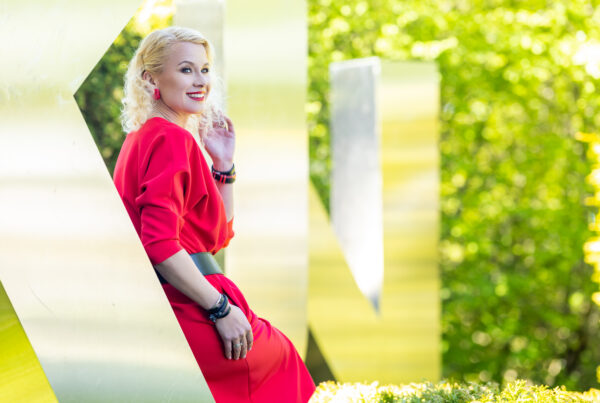
Her Instagram feed is a mix of entrepreneurship, investing, speaking engagements and very everyday life as a mother of two boys and a partner. Her profile says it clearly: founder, mother, wife. This is not “curated perfection” but a conscious decision to show that building a global technology company and having a family are not opposites, but different sides of the same story. A leader who talks on stage to young entrepreneurs about the courage to start reinforces her message with everyday photos and short captions: I am really here; I am not just a figure on a conference stage.
Another strong example of new leadership is investor and entrepreneur Kristi Saare. Her Instagram account is essentially a modern classroom for financial education. The profile shows a simple but powerful combination: investor, author, teacher, entrepreneur, mentor. Her content is not built around showing off a “success portfolio”, but around consistent explanation – how to start investing, what mistakes she herself has made, and why sticking to a long-term plan is harder than chasing quick adrenaline.
She doesn’t talk only about numbers, but also about fears, mistakes and the discipline behind such a path. This kind of open, educational and at the same time clear-cut presence creates a situation where many people trust her message more than any anonymous financial advertisement. From a leadership point of view, what’s interesting is how Kristi combines three elements – visibility, vulnerability and consistent teaching – and builds on them an authority that reaches far beyond a single platform.
What do these stories tell the leaders?
First, authority no longer comes only from a title and a spot in a business ranking. A leader who shows up consistently on Instagram and LinkedIn, explains their decisions, shows what’s happening behind the scenes and responds to real people’s real questions, earns a different kind of trust credit than a leader about whom you can only find an old press release and a couple of articles in an archive. This doesn’t mean everyone has to have a personal Instagram account or show their children and home. But it does mean that in this new context, being invisible is a conscious risk, not a neutral choice.
Second, vulnerability has become an important part of trust. This is not about overflowing emotional oversharing, but about the ability to talk about what is genuinely difficult – and to do it briefly, clearly and without self-justification. When Kristel speaks openly about her journey, including failures and doubts, and shows everyday moments alongside that, it signals to a young developer or future talent that under this leader it is allowed to be a real human being. Vulnerability here is not weakness, but a way to show that the leader is not building their authority on a concrete mask.
Third, the new-era leader stands out not by how brilliant a single article is, but by how consistent the pattern is. The logic of Instagram and other channels favours small but frequent touchpoints, not a “big story” that appears once a year. This consistency is no longer optional – it is part of how leaders perform their role.
If we look for a good metaphor, Instagram and other social media channels are for the new-era leader a bit like a glass office. Not everything is fully transparent – doors can be closed, blinds can be drawn – but the overall impression people get comes from what they see through the window. If a leader has a glass office whose window only shows emptiness or posters with slogans, it’s hard to understand what is really happening inside. But if through the glass you can see meaningful work, people, decisions and sometimes even chaos – and all of this is explained and framed – you get the feeling that this is a room you can step into.
Is the public image aligned with reality? It’s important to understand that this “glass office” doesn’t work only for external reputation-building. These signals are just as important for the people who already work with the leader. Employees watch whether the leader’s public image is consistent with what they experience in the office. Potential talents often make their first decision based on Instagram, LinkedIn and Google. Partners and investors assess whether the leader is consistent, whether they disappear when things get tough, whether they dare to take responsibility when something doesn’t go according to plan.
In my doctoral research, I examine which digital signals support or hinder the formation of trust between a leader and their stakeholders. One clear line runs through it: leaders who know how to combine visibility, measured vulnerability and consistency move closer to their vision faster than those who try to avoid visibility altogether or, on the contrary, treat social media as a place to vent random moods. The first group uses visibility as a tool; the second lets visibility use them.
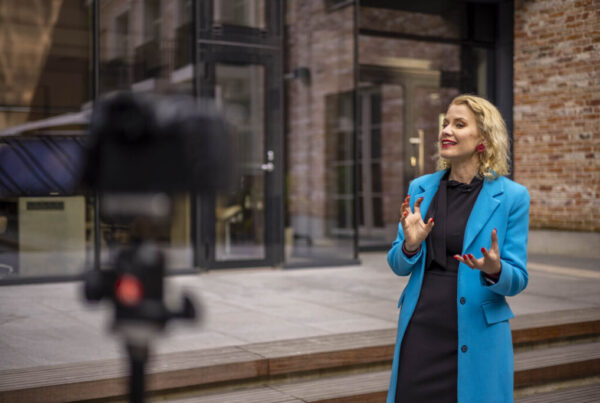
Today, influential leaders build their authority as much through presence as through strategy and numbers. And presence is no longer just the meeting room or conference stage – it is also everything a person finds when they open their phone and type in your name.
Link Original article: https://arileht.delfi.ee/artikkel/120421046/persoonibrandingu-ekspert-mojukad-juhid-ei-ehita-autoriteeti-mitte-distantsi-vaid-kohaloluga