


There are leaders who barely use social media, yet their name alone is enough for partners to show up, journalists to call, and the team to know: this will get done. And there are leaders whose profiles are full of posts, but if you ask, “What do they stand for?”, there’s a moment of silence.
Elamumess is one of those stories that makes this contradiction painfully clear. This is not an influencer-leader building a brand mainly through selfies and stories. This is a leader who doesn’t live in a daily public digital performance, yet whose presence, decisions, and values do the work on his behalf.
That is the visibility paradox. A leader can be influential without posting—yet without that leader, the whole story wouldn’t exist.
Let’s start with an honest truth: a leader does not have to manage their own social media. They don’t have to think every day about what to post on LinkedIn, which filter to use, or how many lines are “algorithm-friendly.” They don’t even have to have a personal profile.
But there is one role that cannot be bought or delegated to an agency: the leader must be the heart and face of the idea. Not a mascot—an actual person through whom partners and clients understand what this initiative stands for, employees understand why it matters at all, and the public senses why this isn’t just “another project.” Trust and impact don’t come from the number of posts, but from the moment a leader’s authenticity meets a clear, well-thought-through strategy.
Housing Fair (Elamumess) : the leader doesn’t shout, but is present
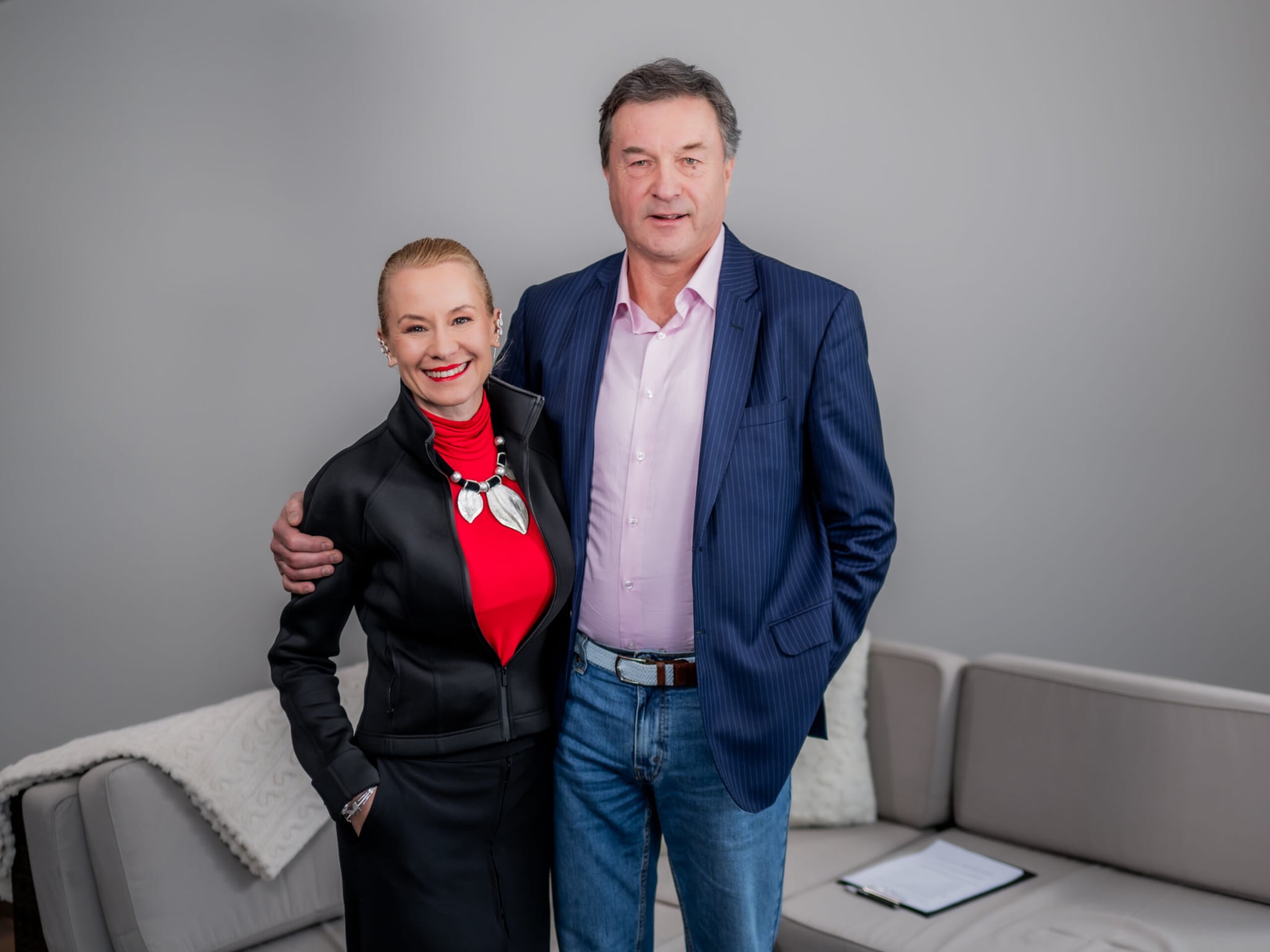
Housing Fair (Elamumess) 2025 is a very concrete example. Before the first houses were finished, there was one person and his vision. Mait Schmidt was not the first person in Estonia to dream about organizing Housing Fair, but he is the first who actually made it happen. For him it wasn’t an abstract project—it was a personal contribution to building a better living environment, one he invested in with time, nerves, and money. “Instead of investing in crypto, I’ve invested in the land beneath my feet,” Schmidt said when speaking about Housing Fair.
If you start looking for Mait’s daily social media posts, you may not find many. And yet Housing Fair attracted more than 10,000 visitors, and over 1,300 original pieces of content were created around it—posts, videos, articles, podcasts—collecting more than 3.3 million views in total. On Instagram, visibility grew to more than 1.1 million views and tens of thousands of interactions. On Facebook, there were an additional 2.3 million video views and 22 days’ worth of watch time.
Mait didn’t write a single post himself. His visibility was born from being genuinely present—in TV interviews, radio shows, panels, the opening speech, partner meetings, and conversations with visitors. His personal story and presence were at the center of social media content, and that is exactly what moved people. People cared not only about what Housing Fair did, but why it was done.
The content was created by dozens of partners: Housing Fair marketing and media team, developers, architects, interior designers, manufacturers. They all shared impressions from Elamumess on their channels. Every story, photo, and short video carried the same idea: this is not just an event, but a laboratory for experiences and future homes.
Lighthouse, not megaphone
A good leader doesn’t have to behave like a megaphone—shouting in every channel, every day, at any cost. Much more important is being a lighthouse. A lighthouse doesn’t blink frantically in all directions. It has one clear beam that others align themselves by. It doesn’t jump from one topic today to another tomorrow—it stays in place: visible, stable, and trustworthy.
In Housing Fair’ case, that meant the focus wasn’t just houses, but the living environment as a whole: how people actually live, how materials, architecture, and landscape work together. At the center was one clear value—co-creation. And one concrete face—Mait Schmidt, who embodied that stance on stage, live on air, and on the construction site.
Social media, PR, and partner channels were like waves carrying the lighthouse’s light further. But the light itself came from inside the leader—from his vision, decisions, and the way he shaped the room.
We often get stuck between two extremes. On one side is the slogan “just be authentic,” and leaders who share everything honestly but without any strategic frame. On the other side is perfect PR, where every word is polished and every image controlled until the person disappears from the story.
Impact emerges where those two meet.
Authenticity means courage. Strategy means focus.
Authenticity means a leader dares to show what they truly believe—even when it won’t please everyone. They say the same thing in a small meeting, on the radio, and in front of a big audience; they don’t choose a completely new role for every crowd. They don’t play the perfect leader; they allow themselves to be a human with a backbone and a style of their own.
Strategy means it’s decided what this leader will be visible for. Not “a little bit of everything,” but specific, clear themes their name becomes associated with. It is thought through which channels and formats they show up in: TV and radio, industry media, conferences, closed events, which social platforms—and which places can be calmly skipped. And there must be a system: a team, partners, an agency keeping the story consistently alive.
From that moment on, it no longer matters whether the leader presses the “post” button themselves or someone does it for them. People sense consistency, clarity, and direction. They recognize the same person in the expo hall, in a newspaper story, and in a social media Reel.
Three things a leader cannot delegate
A leader can delegate social media management. Design, video, texts—everything can be outsourced. But there are a few things that cannot be handed over to anyone else.
First: What do I actually stand for as a leader? If the leader themselves lacks clarity about the core of the idea, no communication plan will save it. In Housing Fair’ case, the narrative wasn’t “a bit of everything,” but consistent: building a better living environment and proving that in Estonia there is room to think big.
Second: How do I affect the room? A leader’s visibility begins in the room, not in the camera. Meetings, negotiations, the small talk after stepping off stage—people quickly sense whether this is the same person they see in the media, or whether the public image and real behavior are two separate worlds.
And finally: each leader must decide their non-delegable touchpoints. For one leader, it’s one important talk per quarter. For another, it’s deep interviews. For a third, it’s partner meetings where the next big steps are set. These are the places where trust is created and reinforced. Only then does it make sense to build more channels, posts, and advertising around them.
Visibility as strategic capital
Housing Fair shows that a leader does not need to post every day to be influential—but they must be the face of the idea, the owner of the message, and allow a system to be built around them that consistently amplifies the story. Visibility is no longer a hobby for leaders, nor just one part of marketing—it is strategic capital and part of the company’s future portfolio.
A leader who understands this no longer argues about whether they should post three or five times a week. They ask instead: how do we build visibility that works even when I’m not online—but I am always present.
Link Original article: https://arileht.delfi.ee/artikkel/120424274/elamumessi-juhtum-ja-nahtavuse-paradoks-kas-juht-kes-ise-ei-postita-saab-pariselt-mojuda